Flavor Boulevard

We Asians like to talk food.
Subscribe

Mai’s Restaurant – 35 years and counting
July 05, 2013 By: Mai Truong Category: Comfort food, Houston, Vietnamese

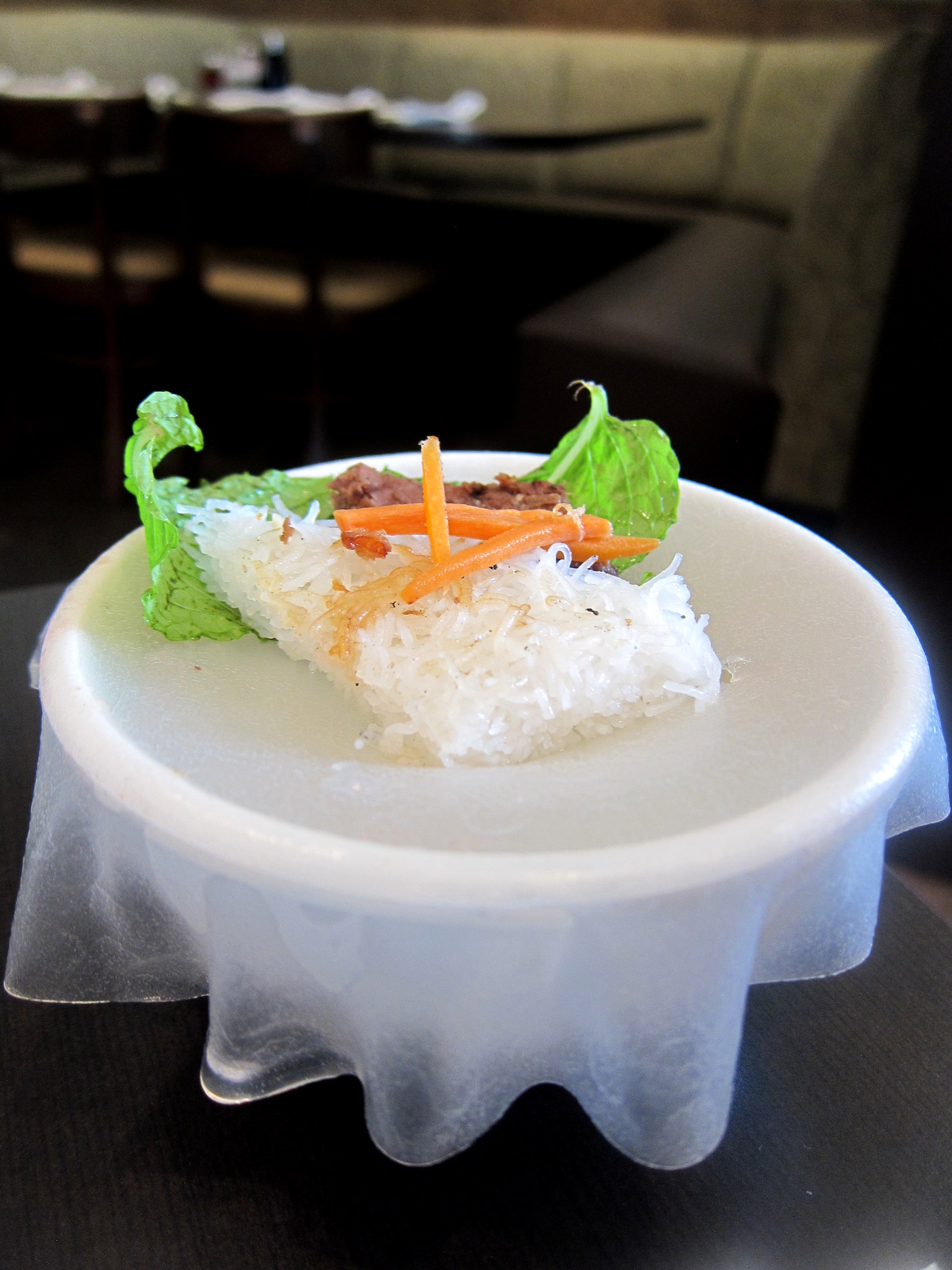
banh-hoi-on-rice-paper
My junior year of high school was my first year ever in America, and I was still learning the rope of living here, high school dance among other things. A friend invited me to Homecoming. For the pre-dance dinner, he talked about going to a Vietnamese restaurant named Mai in Houston. I didn’t know exactly where it was or what it was (this was 2002, Google Maps and Yelp didn’t exist), but I thought that was considerate of him. In the end, we went to a steakhouse instead, I thought it was because Mai was a bit too far away, and I was left wondering what Mai was like.

A few years later, my host parents mentioned Mai again in passing conversation, and suggested we went together sometime. The place, dated back to 1978, is known as the very first Vietnamese restaurant in Houston, and pretty much every Houstonian knows at least its name. My parents and I were interested, but again, days passed and we forgot. One day in early 2010, news came that the restaurant had been destroyed by a fire. We sighed, somewhat regretful.

Luckily, it reopened. I forget how and when we came to know of its re-opening, but this summer, we decided that as Houstonians, it’s about time we should check this off the list.
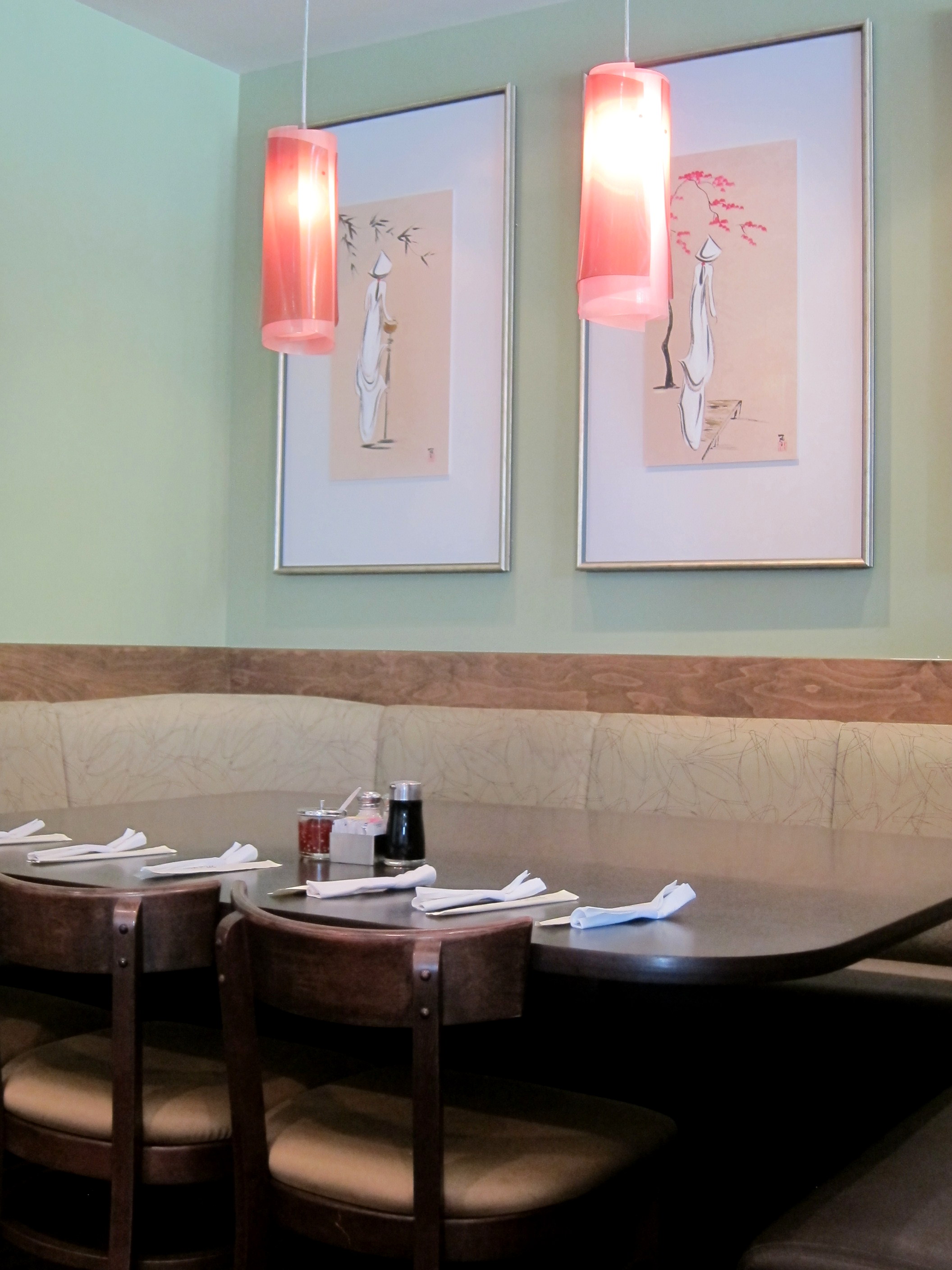
mai-vietnamese-restaurant-houston
As usual, my mom told me to order anything I want, and I did. But I overdid myself, and we struggled to finish a few plates fast enough to have room on the table for the next plate. It was a marathon. The portion was dinosaur-mongous. The three of us packed half of the food home.

APPETIZERS:
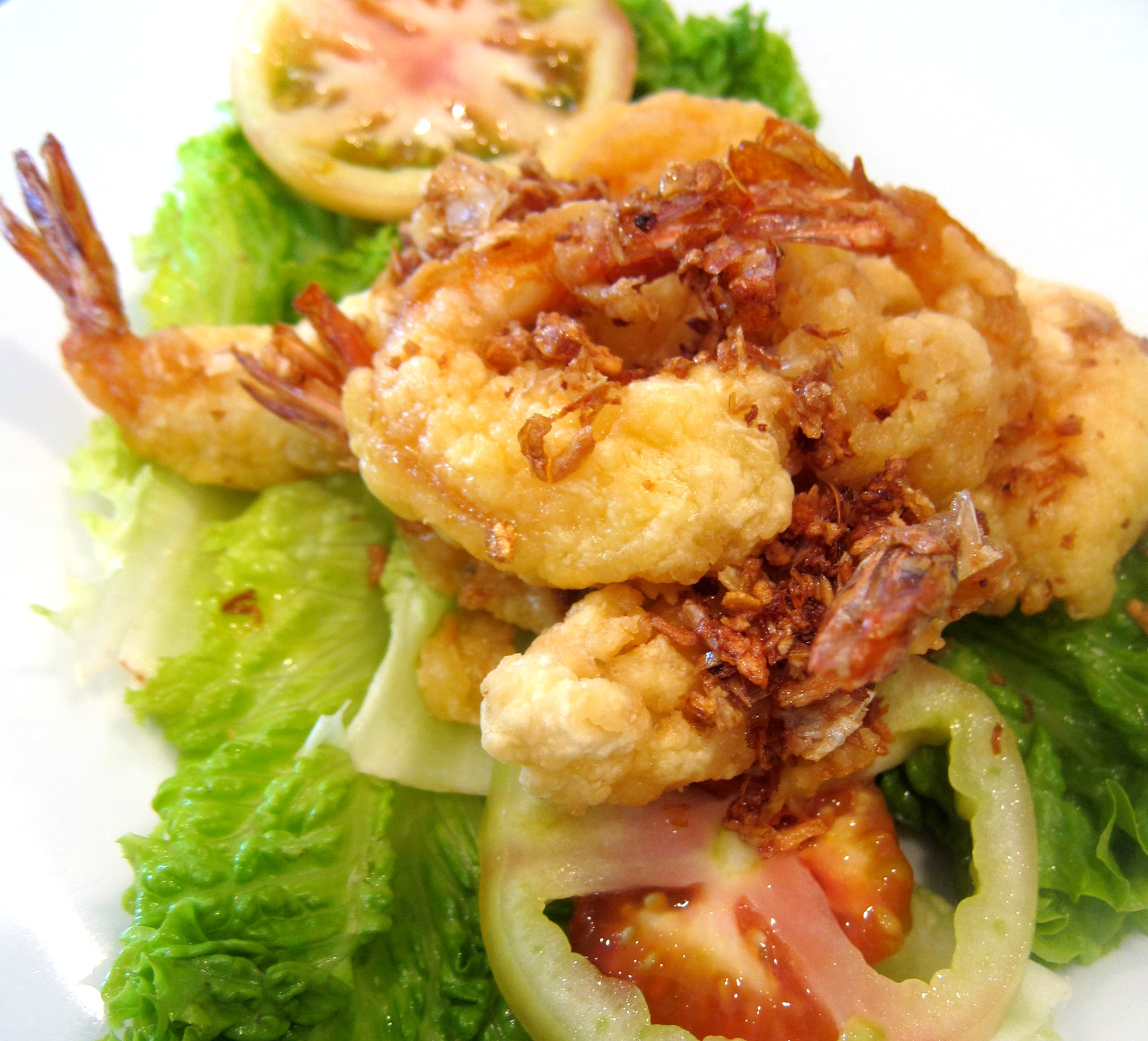
Fried shrimp with garlic butter sauce

Fried shrimp with garlic butter sauce

This plate was the first to be move out of the way. Guess what I poured on my dress? The garlic butter sauce. I smelled “good” for the rest of the day.
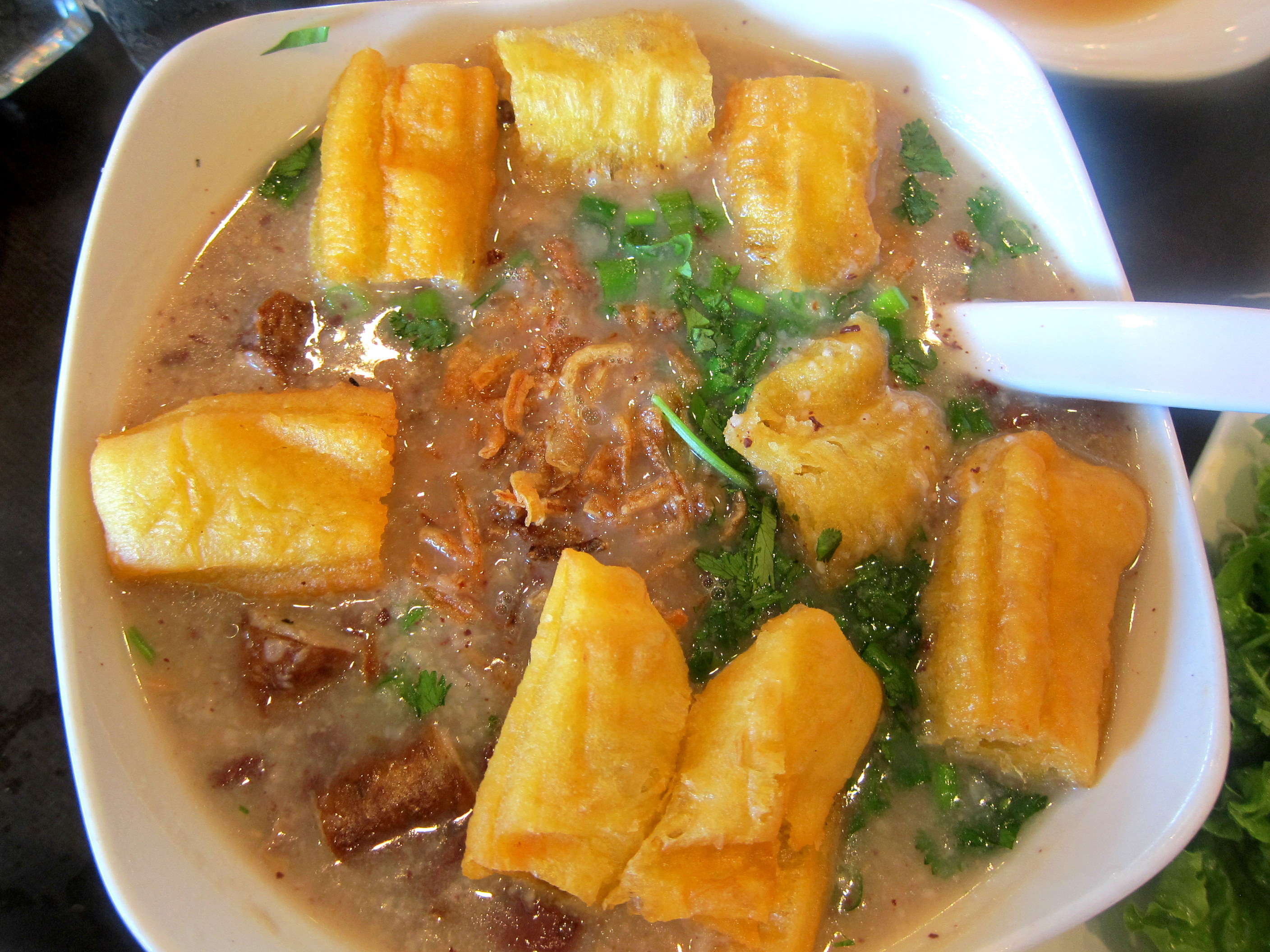
Chao long - rice porridge with "dau chao quay" (youtiao) and pork offals.

Chao long – rice porridge with “dau chao quay” (youtiao) and pork offals.

Yes, this is an appetizer, although the bowl can probably fit me in it.

ENTREES:
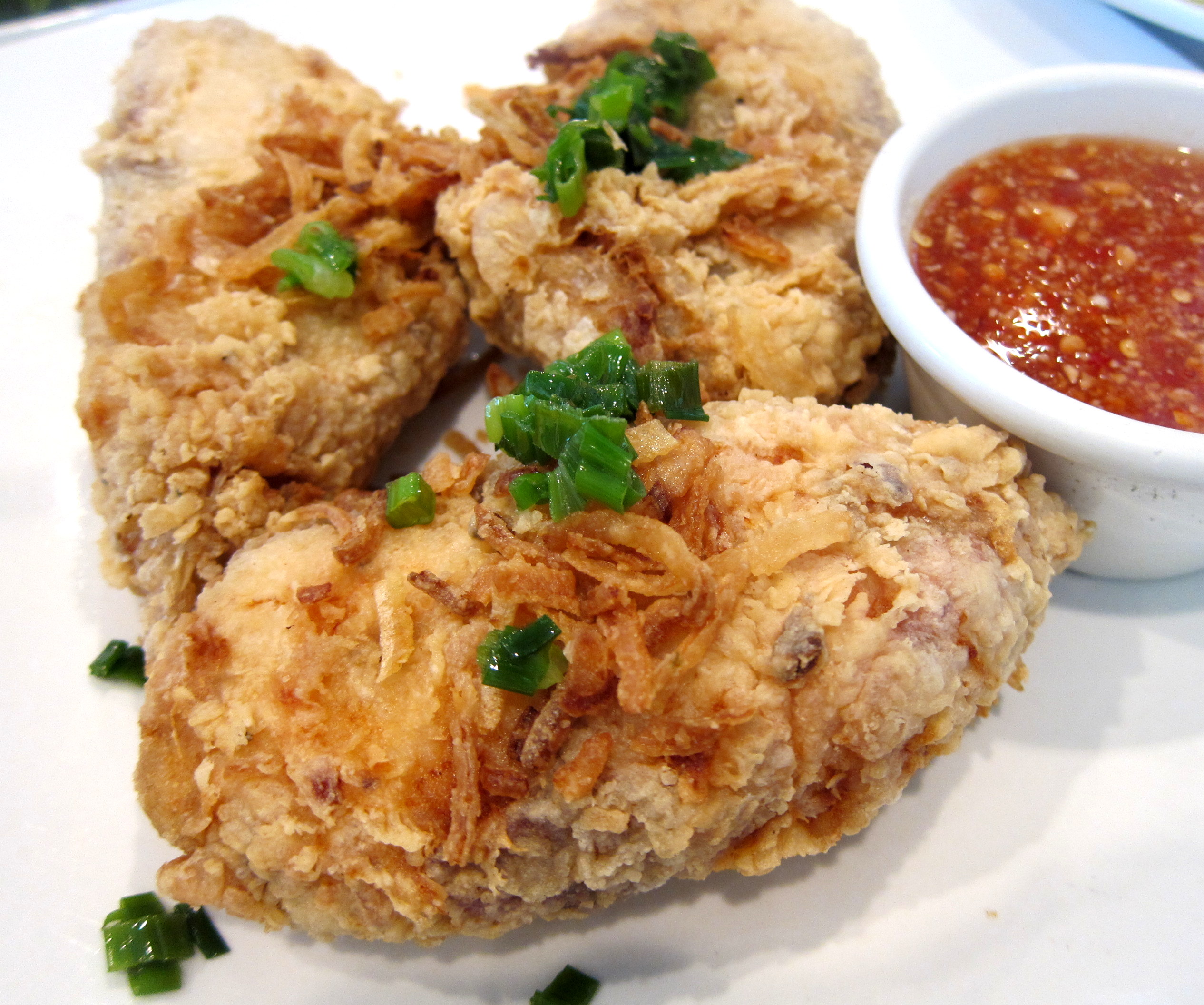
Breaded fried catfish steaks

Breaded fried catfish steaks – Crunchy and not too oily, but I wish they were not breaded and simply pan fried.
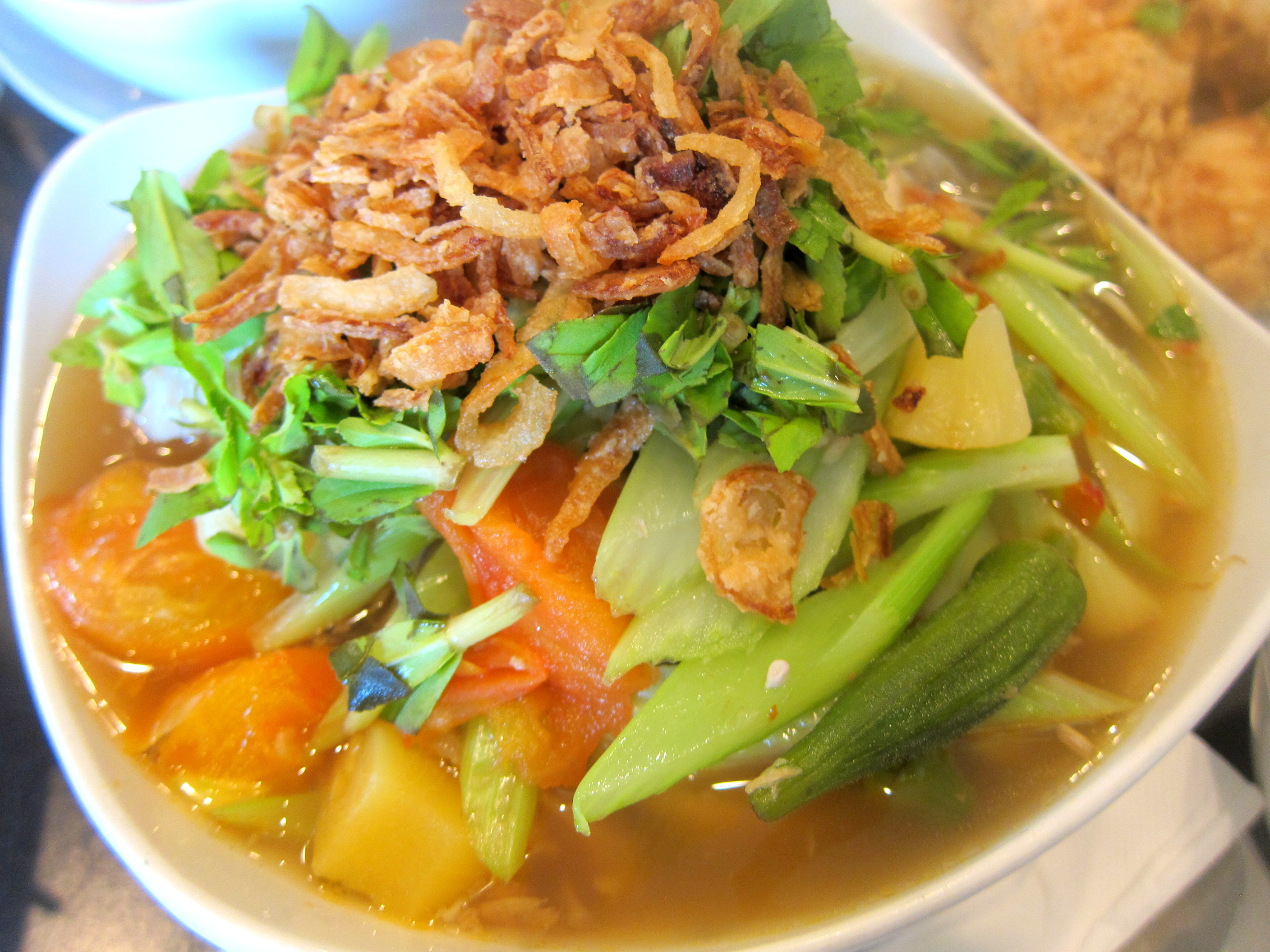
Canh chua - sour soup with fish, tomato, pineapple, okra and celery

Canh chua – sour soup with fish, tomato, pineapple, okra and celery. So refreshing for the summer!
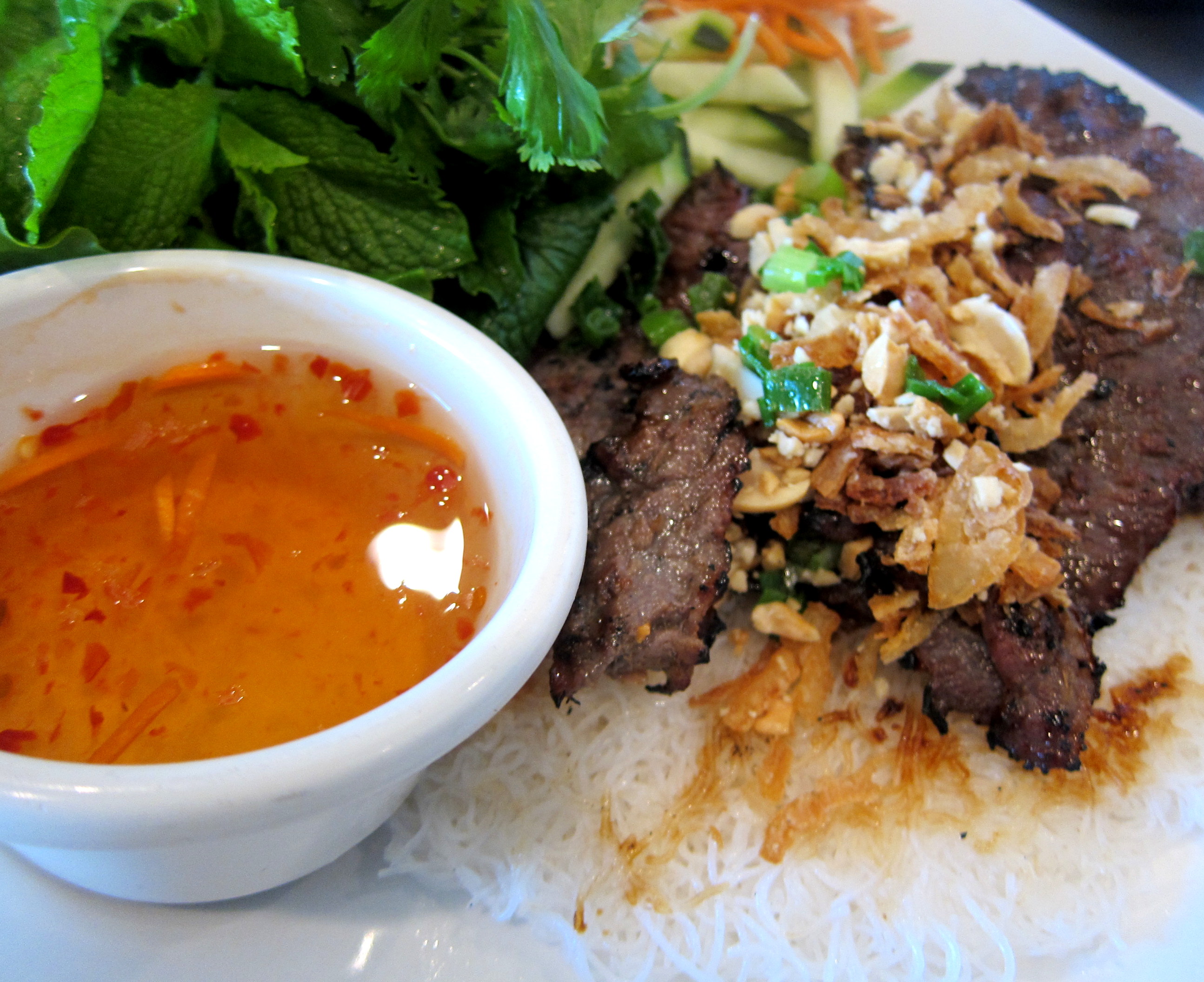
Banh hoi - thin rice noodle mesh with lemongrass grilled beef

Banh hoi – thin rice noodle mesh with lemongrass grilled beef

This one is to be wrapped in rice paper, which my mom artfully put on her bowl like a mini table cloth (the first picture).

DESSERTS:
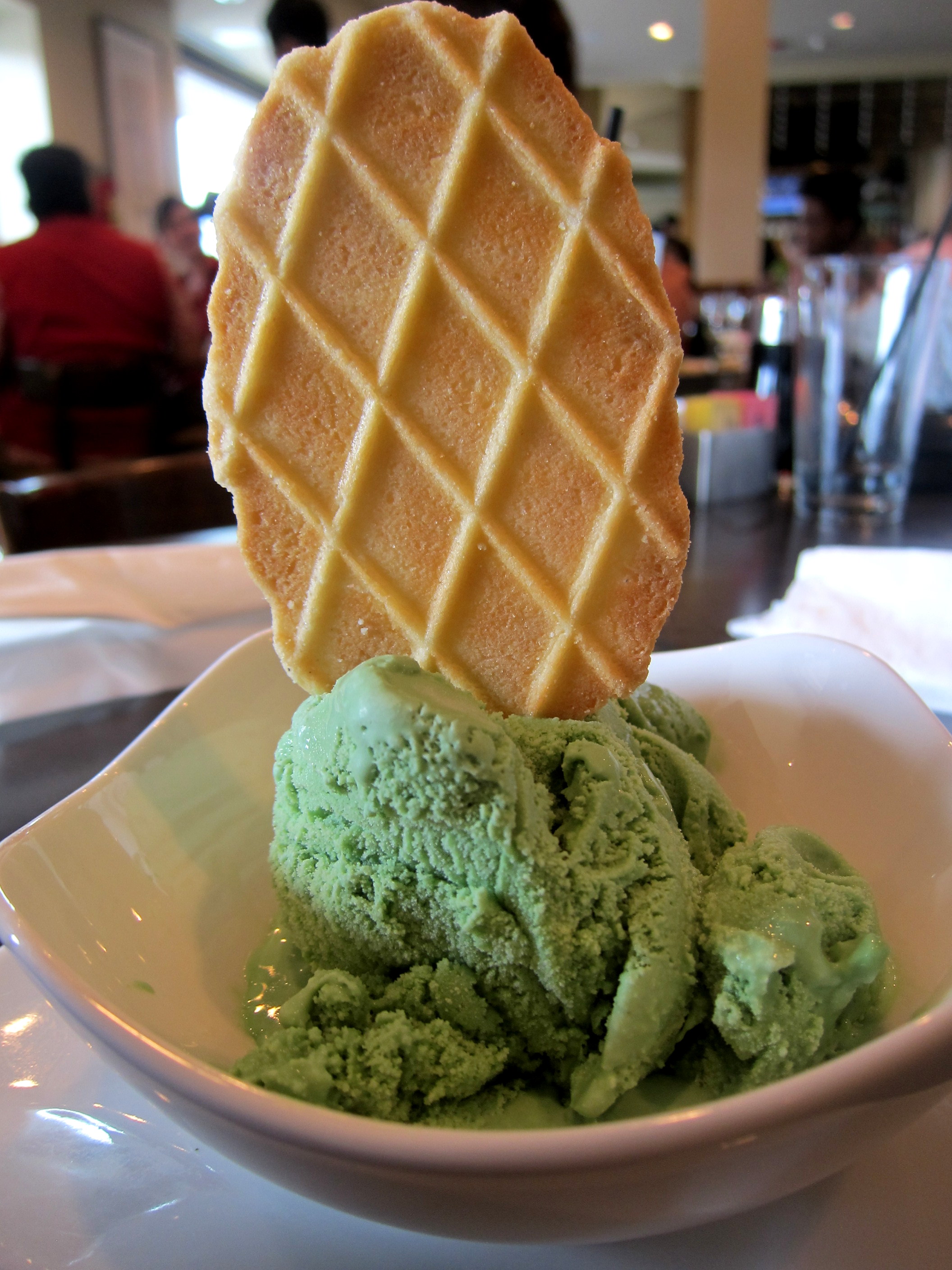
Green tea ice cream
Green tea ice cream

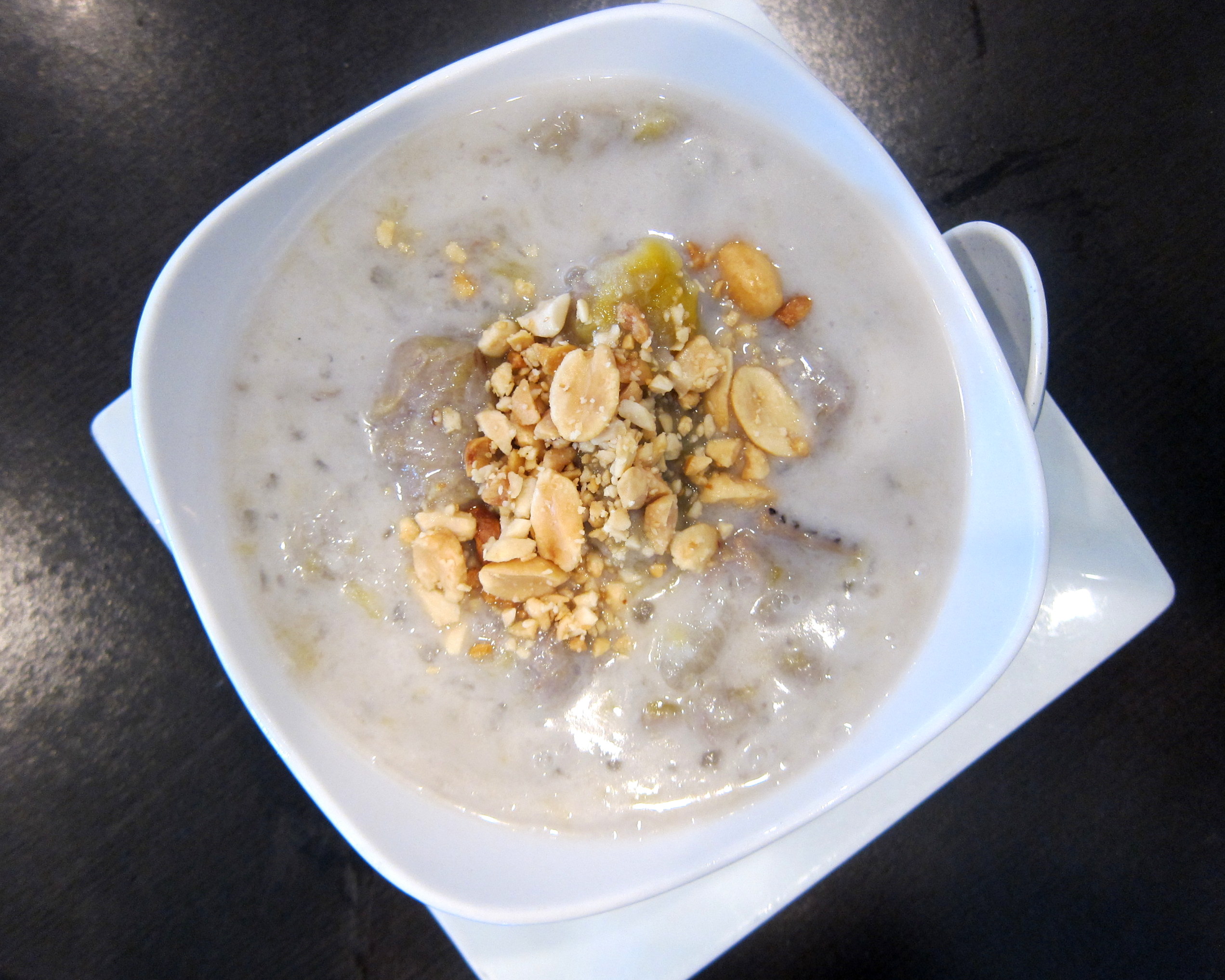
Banana tapioca pudding

Banana tapioca pudding

One of those extremely common desserts in Vietnam that you never see in American Vietnamese restaurants. This one is good (but I like my version better ^_^).

Mai’s menu has a lot of stuff, but nothing strayed from the usuals that you would see at any Vietnamese restaurant in town. Although few things jump out at me, anything that we ordered tastes exactly how we want them to. They make traditional Vietnamese food in the honest, straightforward traditional manner, with abundance to boost, which is also characteristic of Vietnamese food. Their home-styled comfort delivered, and we wouldn’t ask for anything better.

Mai’s Restaurant is at 3403 Milam Street, Houston, TX 77002 – (713) 520-5300
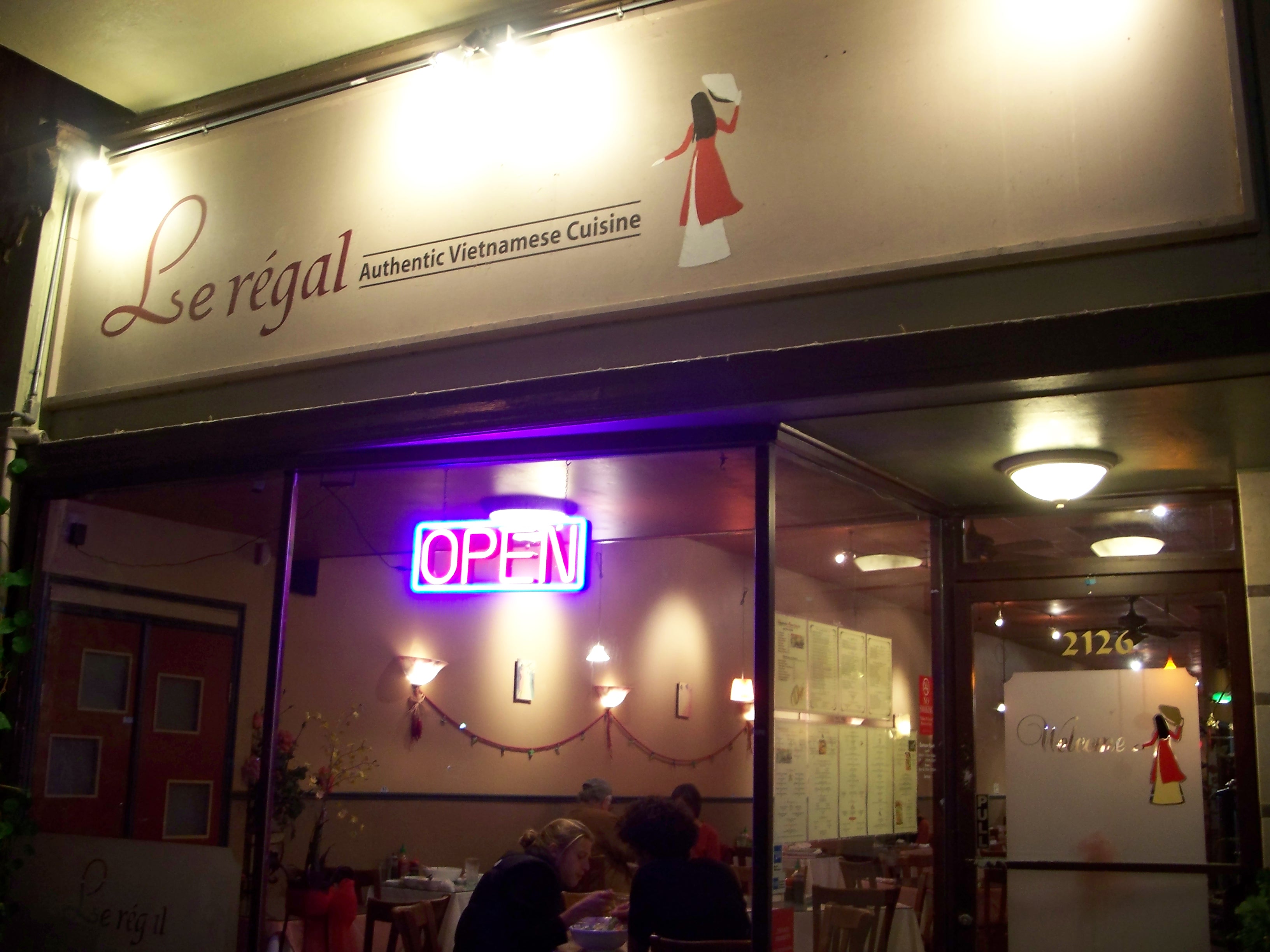
Le Regal – Old food, new taste

December 15, 2009 By: Mai Truong Category: California - The Bay Area, Comfort food, Vietnamese


When asked about Vietnamese food, Americans usually think of phở busily churned out in small noodle houses crowded with plastic chairs and formica tables. Naturally, since most immigrants gather in their community, the variety of traditional food can only circulate in specific areas. A small fraction of the people have settled in a predominantly American neighborhood long enough and are acquainted with the system enough to set up a business, but they often target the young customers with adventurous taste. Meanwhile, most young customers can only afford low price, hence phở and other easily-made noodle dishes make their way to the top.

Careful circumspection would show that pasta alla carbonara requires no more effort than bún thịt nướng, so is it just a matter of gaudy names, flashy advertisement, and aging familiarity that brought one into fancy menus but not the other?

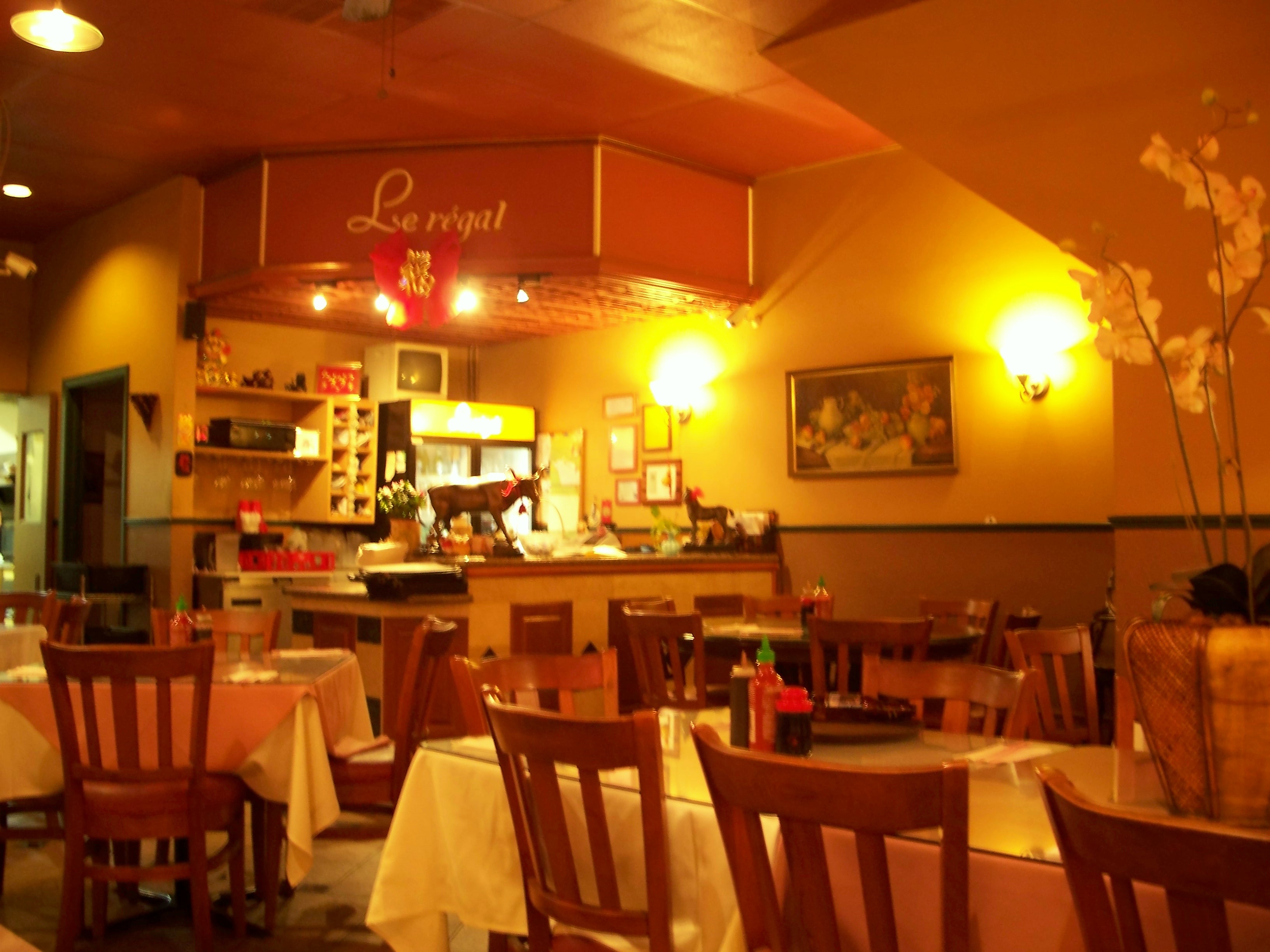
By no means do I want to sound like a snob, but every now and then I get cravings for a nice dinner in a restaurant aptly labeled “restaurant”. Ladles of this melting cheese and mounts of that grated cheese just no longer light the candle. A retouch of Far Eastern eloquence was much needed to make the aesthetic night.


The price is a little steep, but here are clothed tables, warm lights, an all-English menu, little to no disturbances from foreign chattering in the kitchen and among customers. A middle-aged woman, busy like a humming bird, scampered from kitchen to tables with plates in one hand, orders and bills in the other. For a restaurant with a fair size like Le Regal, one-person play seems a little overwhelming. But it works, our food was served within the time it took for us to make a few glances at the decor and exchange some daily news.


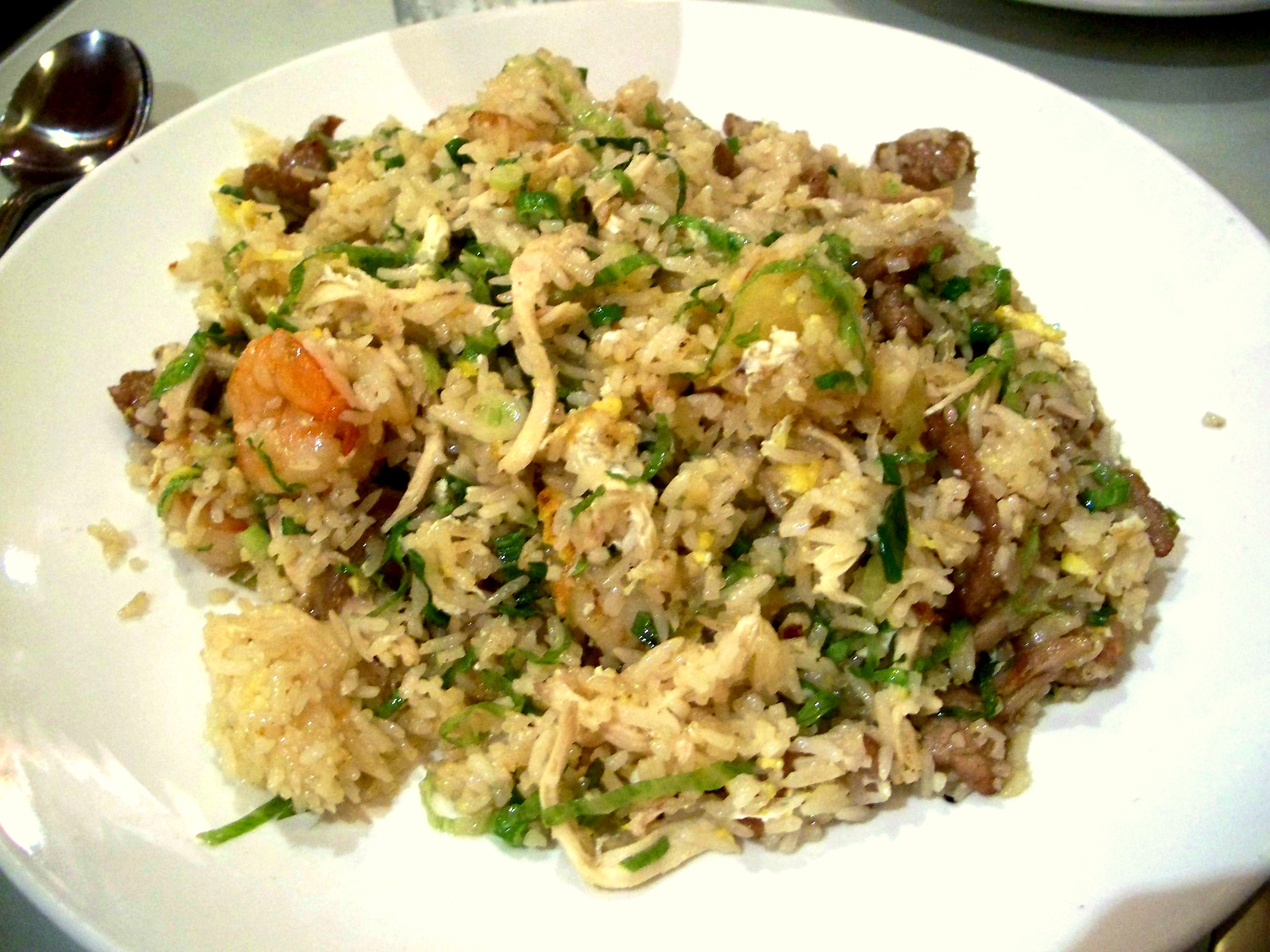
Fried rice is an easy dish, if you throw in some meat, some egg, some legumes, some salt and soy sauce, it can be called well done. Its volatility allows the cook to break free from shackles of recipes, and the eaters to relax from judging its missing-this or extra-that. There’s no fixed list of ingredients, no fixed standard other than appealing to the mouth, hence no objective criterion to rank a plate of fried rice among others. But if we were to nitpick, creativity would pump this one fried rice on top of all other Asian concoctions I’ve had, simply because of the addition of pineapple. There were only a few wedges in that mount, but pineapple is not one to be bullied by other ingredients, its tamed acidity seeps through every grain of rice, sweeter and more thorough than a squeeze of lemon. It helps lowering the guilt of consuming chicken, shrimp, scallops, pork, fried egg and zillions of molecules of saturated fat in frying oil. The rice also made tasty leftover for the next day.


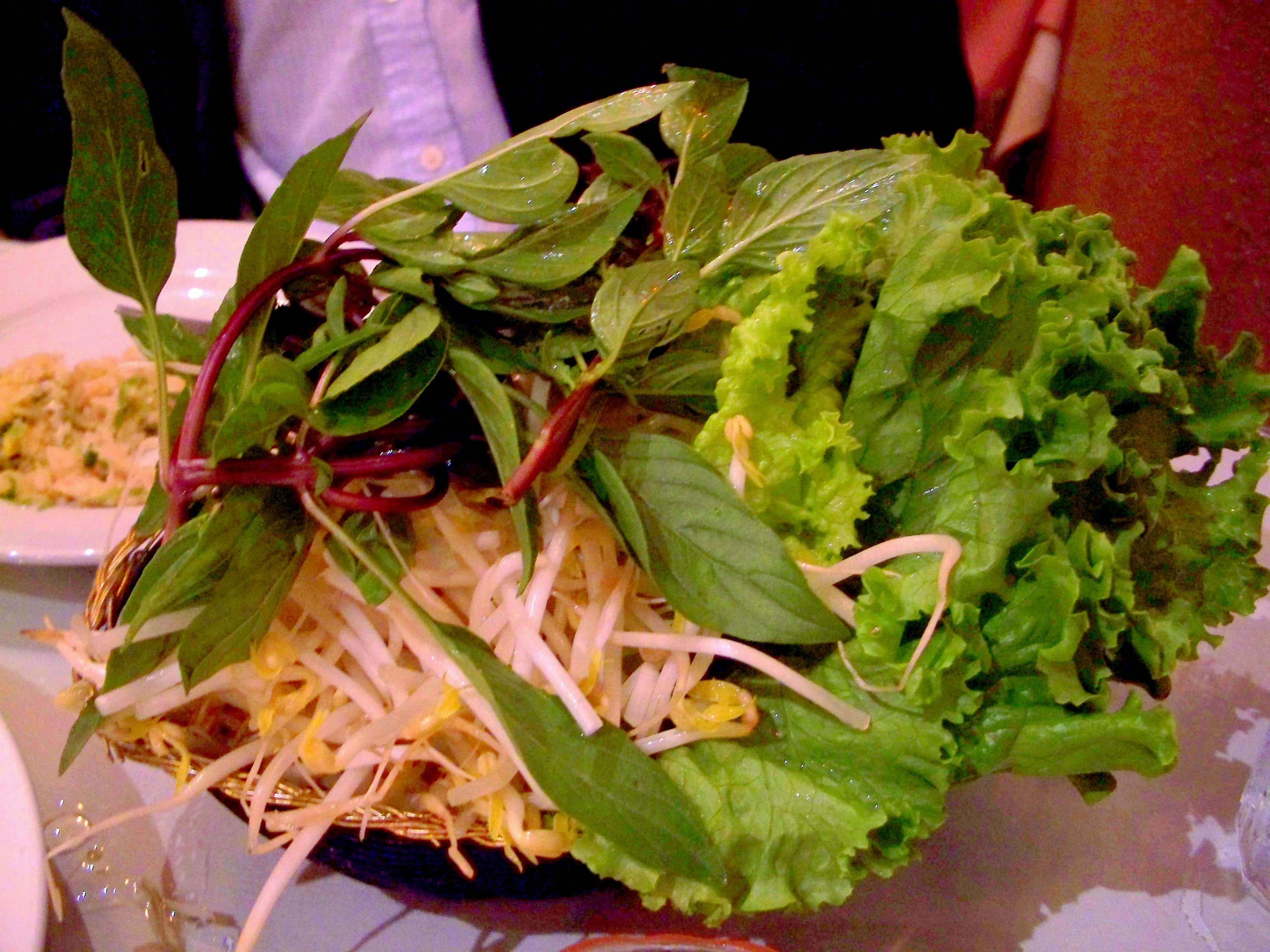
As much as the cook was generous with the protein and the starch, they also gave us enough veggies for ten. At other Vietnamese restaurants, a small plate of sprouts topped with some basil is the usual allowance. Here came a basket of mounting garden goodies. I hadn’t seen any bunch of greens this big for years, especially since we weren’t asking for phở. Not sure what to do, we made lettuce wraps with bean sprout, a couple of leaves of basil and mint, and grilled beef from the other dish we ordered. Dipped in nuoc mam, the wraps were rad.


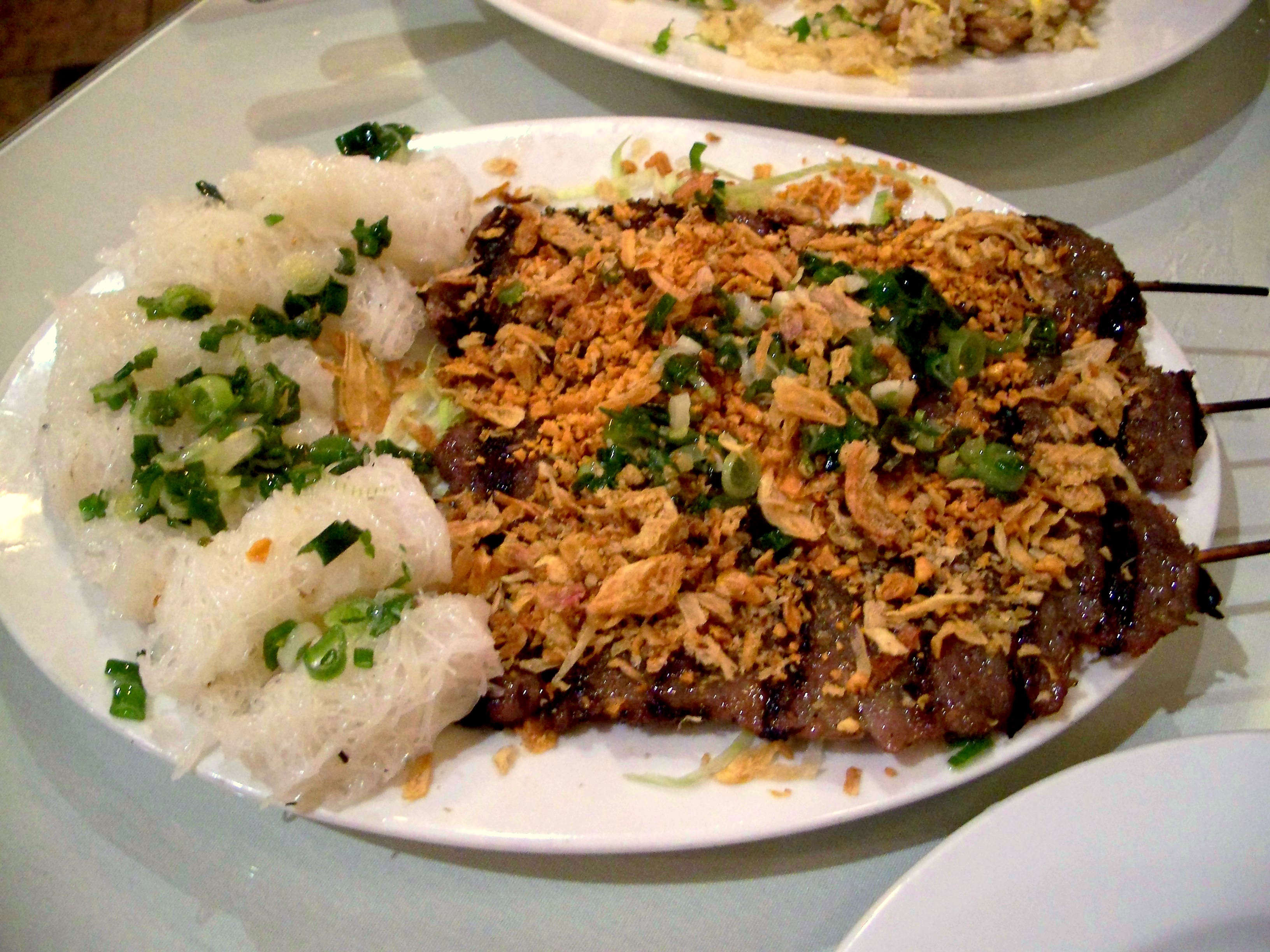
I’ve blogged about bánh hỏi thịt nướng before, so instead of blabbing about the lacy texture, I’d just say that this was delicious. Now clearly it’s a bit disproportionate, nowhere in Vietnam would you find so much meat accompanying so little banh hoi, the rice vermicelli must be the base. But the food pyramid seems to be upside down in America, where meat is vital in keeping you thin and at all cost one must say no to starch. The cook also went bizerk with deep fried shallots and crush peanuts, but those are easily brushed off if you’re not into contaminating grilled beef with relatives of vegetables.

Together with Tomatina, Alborz, some Mexican eatery, and Top Dog, Le Régal makes Center Street a road of international cuisine, of course an addition of kangaroo ragout and kitfo would be nice.

Bill before tip: $26.23 – dinner for two and leftover lunch for one.

Address:
Le Regal
2126 Center Street (between Oxford & Shattuck)
Berkeley, CA 94704

Rice noodle day in Banh Hoi Chau Doc, Bellaire

July 06, 2009 By: Mai Truong Category: Houston, noodle soup, Southern Vietnamese, Texas, Vietnamese

Vietnamese places usually don’t appear on the web, why? Because they already paid for ads on Vietnamese newspapers and radio station. Of course the ads are in Vietnamese. There are a little over 30,000 Vietnamese in Houston. It’s amazing how such a small community can sustain its numerous restaurants, with customers primarily themselves. I think I’ve said the word “Vietnamese” enough times for the month. But let me say it one more. Vietnamese must really like to eat out.

So we found a new address in one of the newspapers. We arrived past lunch time, so it felt as if we rented out the whole place. The hostesses seem to be enjoying their leisurely afternoon snack as well, they sat at a nearby table watching TV with us. A flat screen on the wall with documentary films about Vietnam.

Anyway, let’s start with an appetizer.

This is for 3 people to share. Each bánh bèo (water fern bánh) is like a really thin mini rice-pancake, steamed instead of fried, topped with dried shrimp powder, scallions, and guess what, mung bean paste (once again, Mr. Mung Bean won the competition and became Paste of Choice). The final and most important touch is the nước mắm (fish extract sauce). Bánh bèo, like other Central Vietnamese dishes, cannot go without nước mắm. I’m not exactly sure what the coconut milk is doing there. The thinner the pancake is, the harder it is to eat with chopsticks, or any kind of utensils you can think of, because it’s slippery and fragile like jello. But only the thinnest kind is the best kind. Too thick, and all there is is a block of utmost boring rice pudding. So, I’d say these were above average. Onto the main course.

Bánh tầm bì thịt nướng (bánh tầm with shredded pork skin () and grilled pork). I’m confused by the Vietnamese naming system sometimes, there’s not much “bánh”-ness about this cold udon-like noodle. Authentically it should be shorter and fatter. They really gave us a behemoth bowl here, filled with noodle, peanuts, sliced pork skin (), and veggie, but only one skewer of pork! A little blackened. Good pork though. Can crispy-edge grilled pork ever not taste good?

Bánh canh cua (bánh canh with crab). Yet another rice noodle variation, strangely named “bánh”. I think this restaurant uses the same type of noodle for the soup and the grilled pork dish above. The orange color is from gạch cua (something under the crab shell whose English name I know not). The mysterious substance supposedly is stirred in frying pan until gooey and gives the broth a natural sweetness. I’m not big on sea crawlers. My mom likes it.

Bánh hỏi thịt nem nướng (bánh hỏi with grilled pork and grilled nem – a kind of pork sausage). It’s among the more expensive dishes in Saigon and the abroad, but cheap in the provinces where it was first made. The intricate nets of rice vermicelli gives the tongue a fun texture. Chopped scallions swiftly stir-fried with olive oil and a tad salt gives the sleek taste. Generous sum of sliced cucumber, bean sprout, pickled carrots and the backyard herbs counterbalances the carcinogenic charred and brined meat. Nước mắm is also a must. This plate rightfully makes the restaurant’s name.

Bánh hỏi Châu Đốc

Lunch for three: Bánh bèo tôm cháy: 4.95, bánh canh thịt cua: 6.95, bánh hỏi thịt nem nướng: 9.95, bánh tầm bì thịt nướng: 7.95. Total: $29.80.
Address: 10800 Bellaire Blvd, Houston, TX 77072.

If I recall correctly, the menu does have brief English descriptions, and the young waiter seemed more comfortable speaking English than Vietnamese.

Nha Hang Tay Do

October 12, 2008 By: Mai Truong Category: Chinese, Houston, Texas, Vietnamese

The Hong Kong Market IV complex in Bellaire is always busy. At least during the days I go there. And I’ve been there an awful lot of times. No matter what time it is, the closest parking spot we could get was about 20 rows away from the door. Makes me wonder whose cars those 20 rows are, cannot be just the market’s employees’, can it? On the other hand, across from the artificial minipond and fountain, Tay Do restaurant looks so quiet we didn’t know if it was opened.

This is lunch hour, guys. The place is clearly so packed we had to wait to be seated. The only visible person in charge was talking on the phone and to a waitress behind the kitchen counter, and only spotted our unexpected visit after 10 minutes. Feeling welcome?

Except for the wait, we got more attention from the waiters the rest of our visit. Of course, the service here is about as indifferent as many other Vietnamese eateries, but at least we got our water, our food, and our bill in a timely manner. After all, we came to eat, not to chat and find companionship. And eat we did. A lot. Starting with appetizer: cua lột chiên bơ (butter-fried soft shell crab), eaten with fresh xà lách xoong (watercress). This is simply a must-have. I don’t like crabs because it’s too much work for too little meat, but when the crustaceans are caught shedding their exoskeleton to grow, the shell is soft enough to be edible, and among various possible recipes one of the best is you deep fried ’em. My taste buds like it, but thinking of the weak unprotected crab being thrown into a vat of boiling oil is, you know, unnerving. I wouldn’t be able to do it myself.

As we stuffed the last crab legs down our throat, the array of main course was brought out. From top to bottom: vịt chiên khoai môn (fried duck with taro), bò xào sate (stir fried beef in sate), and bánh hỏi tôm thịt nướng (banh hoi with grilled pork and shrimp).

The taro is the purplish layer underneath the duck meat. I like duck, and I like taro. But somehow the combination wasn’t spectacular. The taro was too sweet and the duck was too dry. Overall score: 2.0/10.0 for innovative idea.

The beef is a tongue trigger. It might have been a tad salty, but was great with steamed rice. I know it’s not spicy because my mom could eat it. 6.5/10 for taste and oldschoolness.

When I wrote this wikipedia article about bánh hỏi I couldn’t find any picture of just banh hoi by itself, without the oodles of meat and condiments atop. Why, you may wonder. Because banh hoi is simply fine thin rice noodle. It’s simply white. It doesn’t look appetizing on pictures by itself. And it doesn’t taste amazing by itself either. Much less because this is downtown Houston and the best banh hoi we can get is the dried prepackaged type imported from Vietnam. Things change after a long voyage. Was it an enjoyable dish with the company of grilled pork and shrimp, though? Oh yes. Don’t forget spoonfuls of nuoc mam either. The best thing is this dish is so light. I was not miserable after finishing it. 6.5/10 for satisfaction.

The whole bill came out $57.26. There were a few other customers coming in as we were leaving. The manager/main waiter informed us that this place has been mentioned in several American reviews (didn’t say which ones), and since they’ve been here since I first went to Bellaire in 11th grade, I suppose their business is decent. The red lanterns hanging at the front door enhance the Chinese look, the menu is littered with kung pao chicken and chow mein, the restaurant is named Tay Do (West Capital) after the common name for Cần Thơ, Vietnam. But that’s ok. How should I sum this up? Shania Twain’s song comes to mind.

Address: Tay Do Restaurant (next to Hong Kong Mall)
11201 Bellaire Blvd
Houston, TX 77072
(281) 988-8939