Flavor Boulevard

We Asians like to talk food.
Subscribe

Sandwich Shop Goodies 20 – Xôi khúc – Jersey cudweed sticky rice
May 27, 2012 By: Mai Truong Category: Houston, Northern Vietnamese, One shot, sticky rice concoctions


There’s a Vietnamese song that starts like this: “Ten years pass by without seeing each other, I thought love had grown old/ Like the clouds that have flown by so many years, I thought we had forgotten.”(*) It then went on to say, as you might expect, that the narrator still yearns for that love like ten years ago. An even more dramatic thing happens to me: I still crave xôi khúc with the same passion of the last time I had it, which was twenty years ago.

The lady who sold xôi khúc (xôi cúc if you’re from the South)(*) near our elementary school was old. In her sixties at least. She was clean, so Little Mom bought xôi from her. We never had xôi khúc from anyone else, and I don’t remember seeing anyone else selling it. Loosely wrapped in banana leaves like all other xôi(*), her xôi khúc beamed with the smell of ground black pepper in the bean paste and the cool, herbal flavor of the steamy sticky rice. After the lady stopped showing up in the mornings with her basket, we stopped having xôi khúc for breakfast.

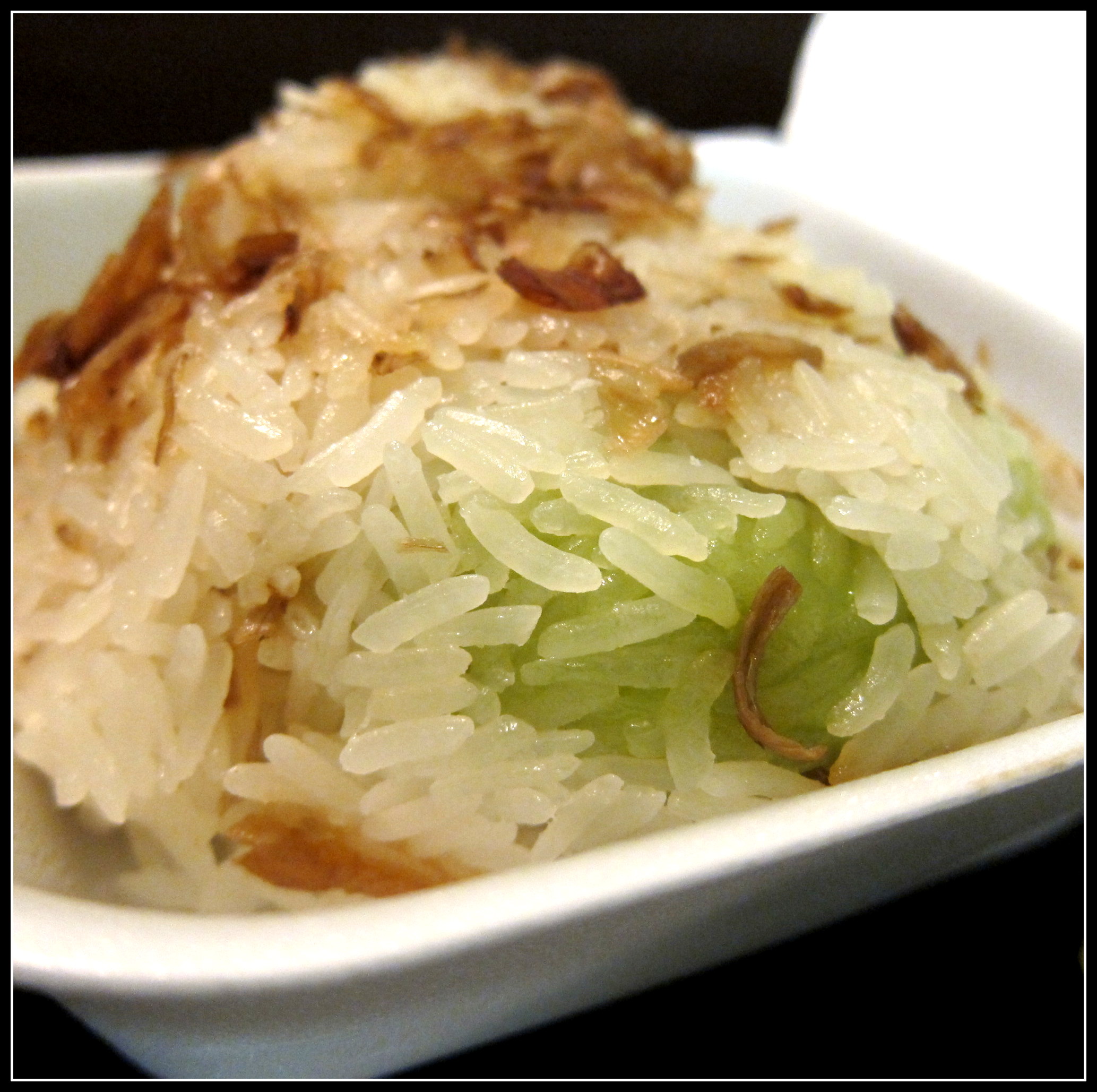
Xôi khúc is too much of a hassle for living-alone home cooks. First of all, you need the leaves that make xôi khúc xôi khúc: the not-so-popular-and rau khúc (“rau” is greens)(***) whose English name I could find only after I found out its Japanese name from the blog of a Vietnamese expat in Japan, and I don’t even know Japanese. The Japanese use this grass in their kusa mochi, a category of grass mochi to which the yomogi daifuku belongs. De javu. The Vietnamese grind it up and use the juice to knead sticky rice flour into a dough and make xôi khúc. The dough coats a ball of savory mung bean paste, the whole thing is laid between thin layers of sticky rice and steamed. In the end, you get a handful of something with grains of sticky rice on the outside, so its appearance is like xôi, and a ball of grassy sticky rice dough with bean paste filling on the inside, so its construction is like bánh (anything made of dough). Hence its name varies: bánh khúc, xôi khúc, xôi cúc (the Southerners’ simplified pronunciation).
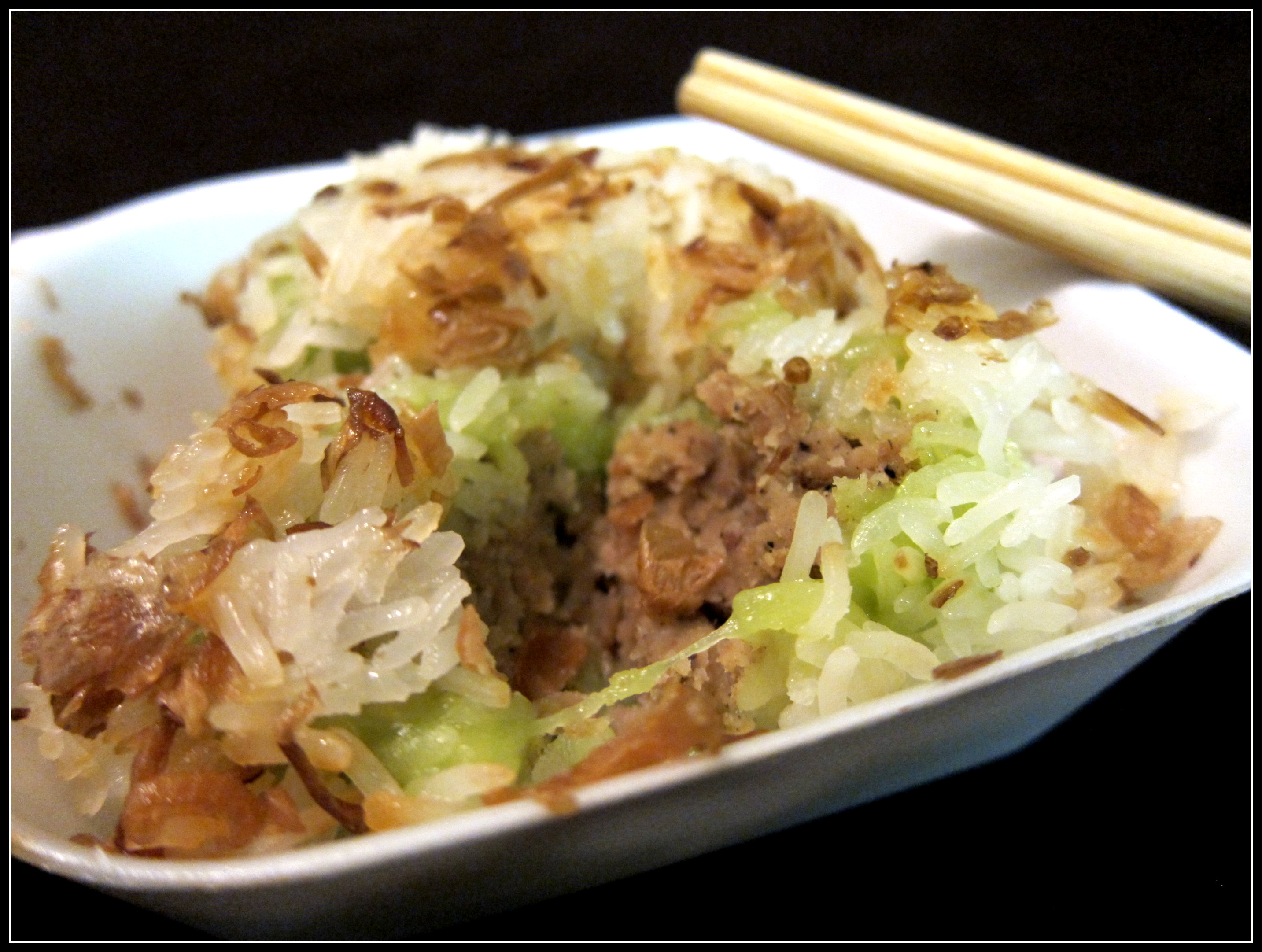

Today, I’ve reunited with xôi khúc. This small store in Bellaire, packed with xôi, chè, savory foods and customers at 9 on a Sunday morning, sells xôi khúc1 đồng 1 viên ($1/ball), each ball as big as a lemon, two of them fit snuggly in a white styrofoam box. The rice scoop digs into the tray. A slight bounce and the soft sticky rice separates. A familiar peppery smell infiltrates my veins. The guy asked if I’d like to top them with a few spoonfuls of fried shallots. Yes, please!

Address: Đức Phương Thạch Chè
11360 Bellaire Blvd
Houston, TX 77072
(281) 498-1838
(also in the Vietnamese Veteran Memorial area, near Giò Chả Đức Hương where Little Mom buys silk sausage)

Previously on Sandwich Shop Goodiessesame beignet (bánh tiêu)

(*): Vietnamese lyrics: “Mười năm không gặp tưởng tình đã cũ/ Mây bay bao năm tưởng mình đã quên”. The song is titled Mười Năm Tình Cũ (“love dated ten years”). You can listen to it here.
(**): xôi is steamed sticky rice, either mixed with beans (sweet xôi) or eaten with meat (savory xôi). I’ve written about xôi bắp (corn xôi) and xôi đậu (peanut xôi) before.
(***): Gnaphallium affine, Jersey cudweed in English, hahakogusa (ハハコグサ in Katakana or “母子草” in Kanji) in Japanese. My inner linguistics savvy especially likes the Japanese name: 母 (haha) is Kanji for mother, 子 (ko) child, and 草 (gusa) grass: so rau khúc is Mother [and] Child Grass (mẫu tử thảo).
Nutty sticky rice

June 14, 2011 By: Mai Truong Category: Comfort food, Houston, One shot, Southern Vietnamese, sticky rice concoctions, Vegan


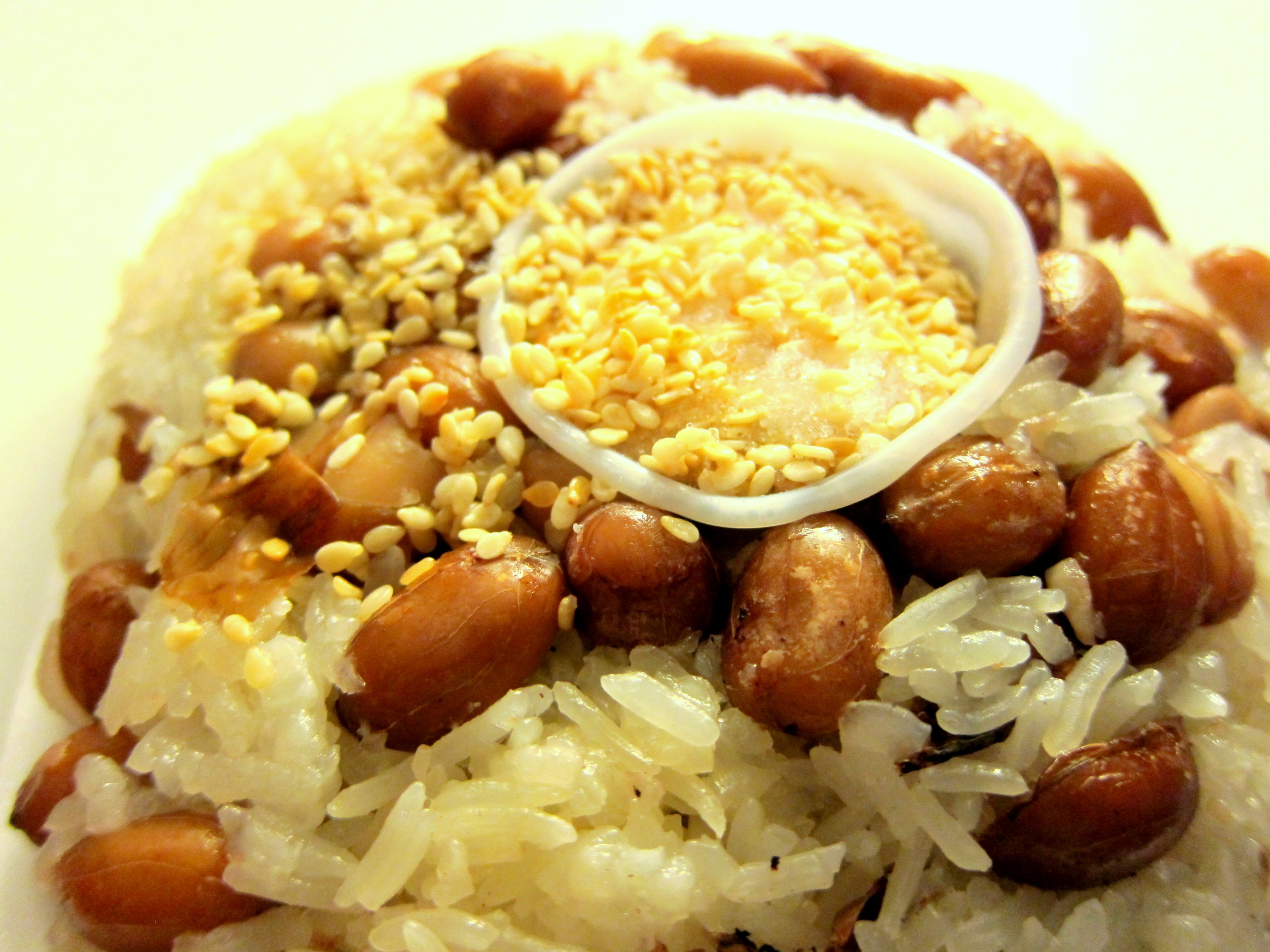
What hits the spot in the morning better than a hot packed handful of sweet sticky rice with muối mè (sesame-sugar-salt mix)? A hot packed handful of sweet sticky rice with soft steamed whole peanuts and muối mè. Xôi đậu – my forbidden childhood love.

$1.50 for a full tummy.

Mom did not want me to eat too much xôi đậu in the past because peanuts are known for producing gas excess.

Address: Alpha Bakery & Deli
11205 Bellaire Boulevard
Houston, TX 77072
(281) 988-5222

A sticky crusty crush

December 16, 2010 By: Mai Truong Category: Comfort food, RECIPES, sticky rice concoctions, Vegan, Vietnamese

Do you like that crisp, burnt, gochujang-dyed rice crust at the bottom of the dolsot when you scrape off spoon after spoon of bibimbap? If the answer is yes, I’m certain that you’d fall for this one too.

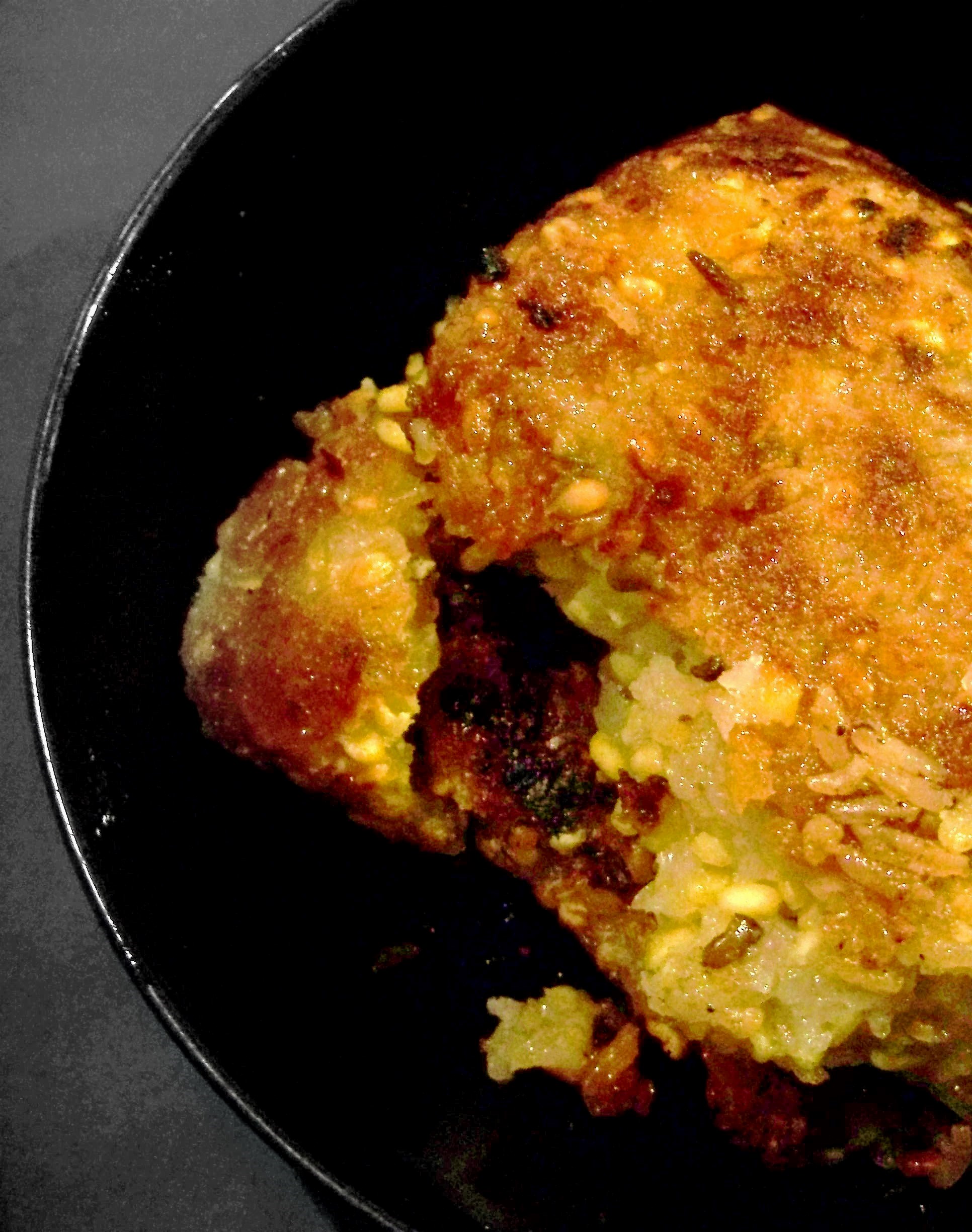
Mom cooks her xoi in a non-stick pan, with coconut milk and little water. Somehow, without a precise recipe, she can make a shell of brown, sweet and crusty sticky rice every time. Then we fight each other for it when it’s still warm and just a tad chewy, leaving the soft innard xoi for my dad.

Approximate recipe: Xôi cháy (literally “burnt xoi”, usually considered a point against the skillful xoi cooks, but I think it’s better than icing on a cake, it’s the best part of a perfectly cooked batch of xoi)
– 1 lb sticky rice
– 1/2 lbs mung bean (halved is fine, unscraped)
– 1 can of coconut milk
– 1/2 tsp salt
– sugar (lots! ~ 8-10 tbs)

Soak mung beans in water overnight to soften them, so that they get cooked faster (at about the same rate as the sticky rice). Mix sticky rice and beans together.
Put sticky rice, mung bean, a can of coconut milk, and just enough water to have the grains 1/10 inch under the liquid surface. Cook in a deep pan, covered, on medium heat. (If cooked in rice cookers, the bottom crust won’t form.)
When the mixture boils, turn the heat to low, wait about 10 minutes until most of the liquid is soaked into the grains, then use a chopstick to make holes in the mixture, allowing steam to circulate easily all around. Keep covering. Cook for another 10-15 minutes.
When rice and mung bean are soft, sprinkle salt and sugar on top, then gently mix (with chopsticks) the xoi without disturbing the bottom layer. (This is exactly what you must do when eating dolsot bibimbap, you don’t want the crust to mix with the soft part.) Make holes in the mass again. Cook for a few more minutes.
Scrape off the xoi innard first and store separately. Take out the whole crusty shell with care, or break off into chunks. Eat by itself. Flavorastic by itself.

Tags:

Sandwich Shop Goodies 4 – Xôi bắp (sweet sticky rice and corn)

July 04, 2010 By: Mai Truong Category: California - The Bay Area, Comfort food, One shot, sticky rice concoctions, Vietnamese


Every morning at six, sometimes five thirty, my dad went to the market with my mom’s grocery list, and on the way back picked up something fresh for my breakfast. He had to be extra early if we wanted xôi that day, because the warm morsels folded up in banana leaves wouldn’t last past six thirty. Sweet xôi was a popular morning food, until they started putting in lap xuong and pork floss and turned it too close to a lunch thing. But our xôi lady, and later her daughter, never made anything but sweet sticky rice in their loyal steamers. Every morning, sitting on a plastic stool and head half-covered by the cone hat, they surrounded themselves with three or four shining aluminum wok-like basins on the low table, neatly cut squares of banana leaves, old newspaper and rubber band in the side basket. Those aluminum basins often had peanut xôi, black xôi (which actually looked purple), and one other speciaux du jour. My mom was so concerned with my health that she would pick off all the peanuts if my dad got the peanut xôi, and I got really bored with black sticky rice and sweetened bean paste, so there was no telling what I would get for breakfast. On rare occasions it was corn. My favorite.

Without the seed coat and the yellow tip, each kernel was all soft, white and plump, must be twice its natural size. The sticky rice too was gummy, hardly discernible from the corn. I’d try to eat all the sticky rice first and save my precious puffs for last. Our xôi lady always covered the white palmful with mash mung bean, a big spoon of sugar, and a pinch of fried shallot. Arguably the fried shallot tempered the “sweetness” of this xôi, but it’s not as crucial as sugar and sweetened mash bean. Something I didn’t realize until years later.

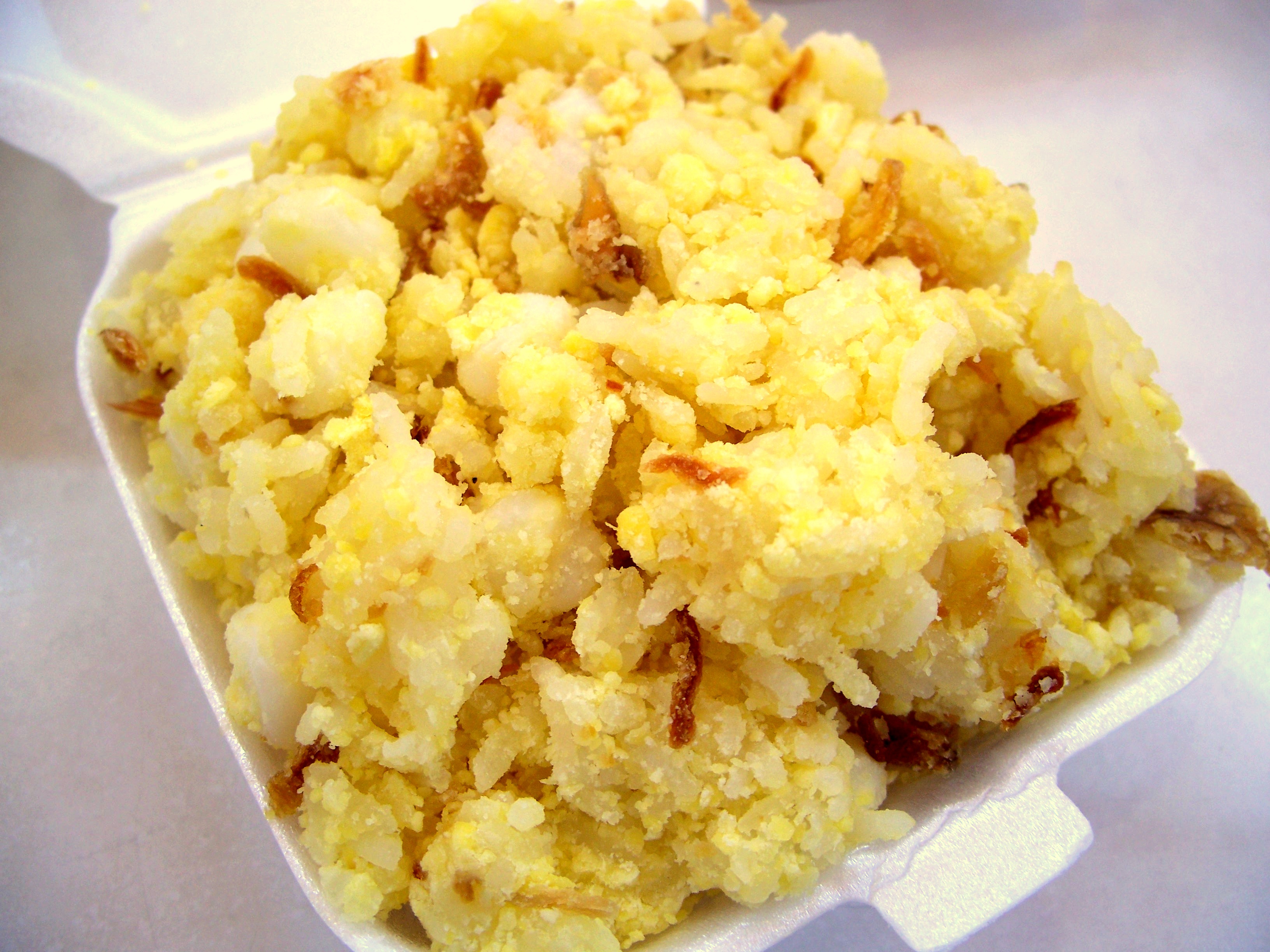
We moved sometimes at the end of sixth grade, then again, this time across the Pacific, at the end of eleventh grade. My chance of eating corn xôi dropped like the housing market in Detroit. Partly because the cling wrapped stuff on styrofoam plates doesn’t at all look like Ms. Điệp’s warm morsels. So you can imagine my excitement when I saw it at Kim’s Sandwiches, not wrapped up but in aluminum trays behind the counter. Sure, they put it in styrofoam boxes when you order, but that’s still better. I got two for five dollars.

It might have been bad timing. I blamed it on our late morning arrival: xôi is best when it’s just thirty minutes out of the steamer, cool enough not to burn yet warm enough to keep the sticky rice gummy and moist. Our xôi was cold and dried up. But it was also bland. Lack of sugar in corn xôi made it un-corn-xôi-like. The grains and kernels were coated with mung bean powder, not mash, hence we got a heap of powder-coated grains and kernels instead of corn xôi. This is the Northern Vietnamese style, but frankly it’s incomparable with the Southerners’ sweet twist.

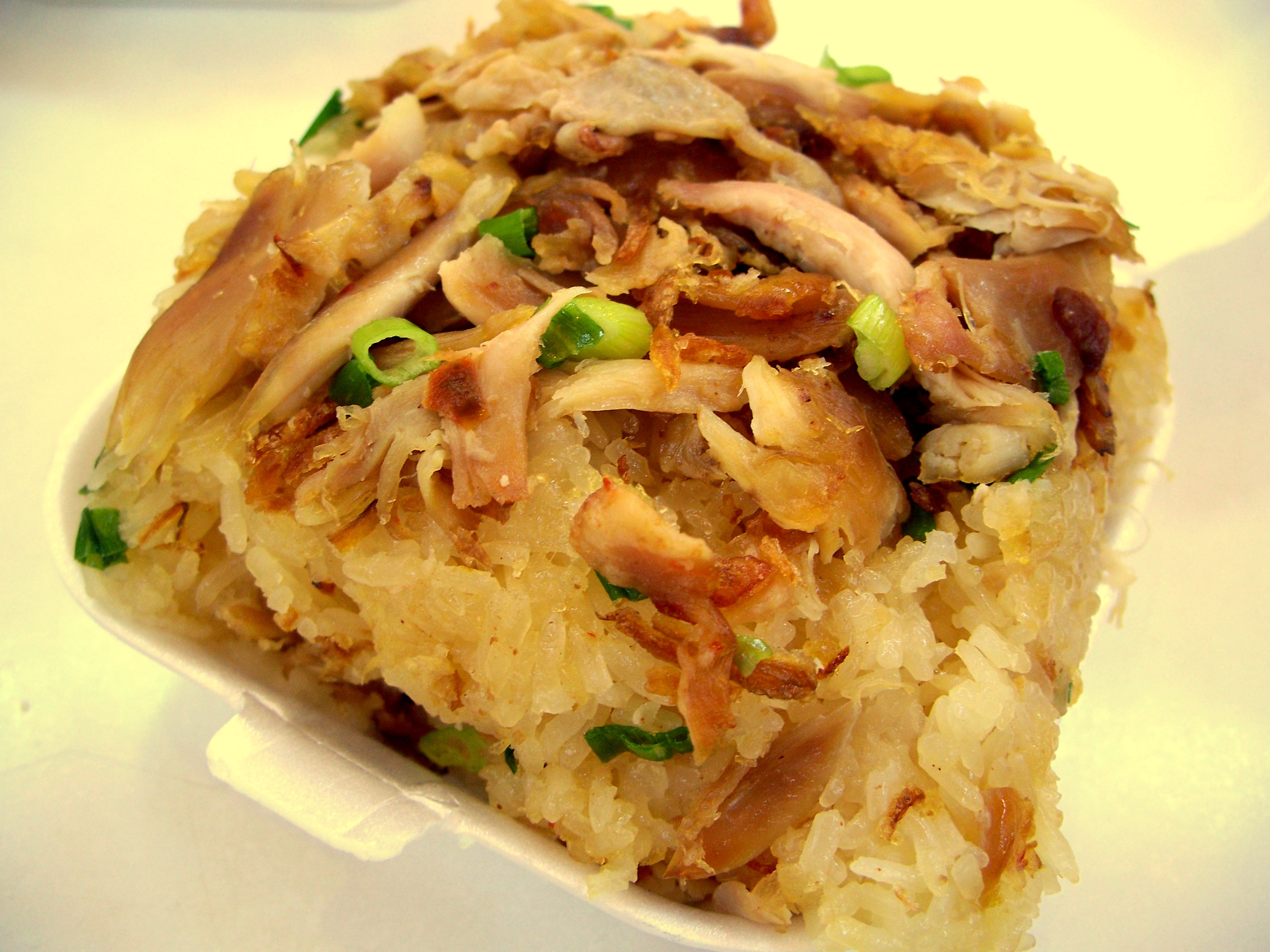
On a brighter note, Kim’s Sandwiches’ savory xôi, with roasted chicken and green onions, proved worthy of toothwork. Although the sticky rice was also cold and dried up, the meat was plenty and flavorful to boost.


On an even brighter note, the corn xôi was well-salvaged by a sugar dispenser and a microwave.

———————————————————————————————–

Xôi bắp and xôi gà ($2.50 each) from Kim’s Sandwiches
(in the Lion Supermarket area)
1816 Tully Rd 182, San Jose, CA 95111
(408) 270-8903

Previously on Sandwich Shop Goodies: bánh ú tro
Next on Sandwich Shop Goodies: bánh khảo/bánh in